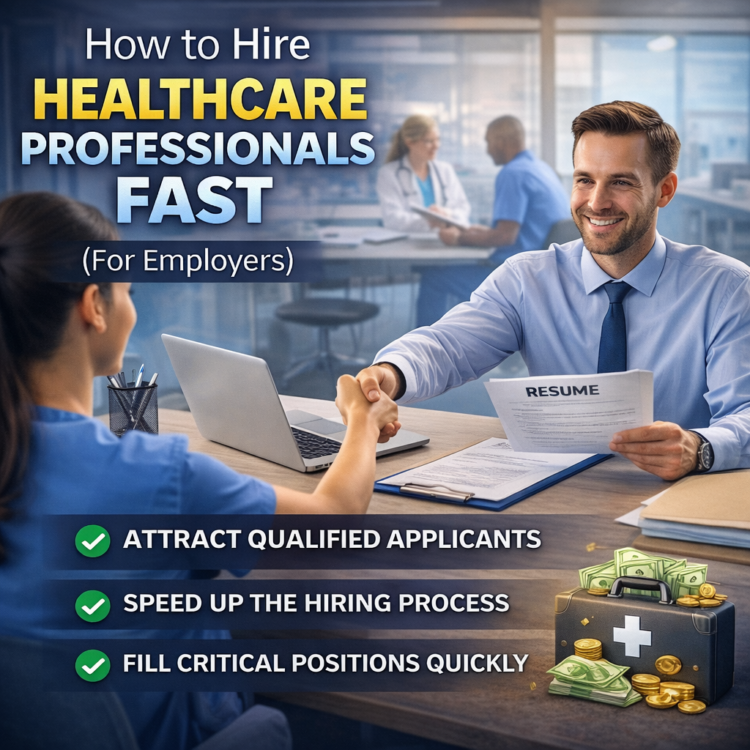
Hiring qualified healthcare professionals has never been more competitive. Between ongoing staffing shortages, increasing patient demand, and candidates receiving multiple offers, speed and strategy are everything.
If your organization is struggling to fill roles quickly, this guide will show you exactly how to attract, hire, and secure top healthcare talent—faster than your competition.
Why Healthcare Hiring Is So Competitive Right Now
Before fixing the problem, it’s important to understand it.
- Demand for nurses and healthcare staff continues to outpace supply
- Many candidates receive multiple offers within days
- Burnout has pushed experienced professionals to change roles or leave the field
- Travel and contract roles are pulling candidates away from permanent positions
Bottom line:
If your hiring process is slow or unclear, you’re losing candidates to faster-moving employers.
The Biggest Hiring Mistakes (That Cost You Candidates)
Most employers don’t realize they’re pushing candidates away.
1. Slow Response Times
Top candidates are often off the market within 3–7 days.
2. Weak Job Descriptions
Generic postings don’t stand out or attract serious applicants.
3. Too Many Interview Steps
Long hiring processes create drop-off.
4. Unclear Compensation
If pay isn’t listed or competitive, candidates won’t apply.
5. Poor Candidate Experience
Lack of communication leads candidates to accept other offers.
Step 1: Write Job Posts That Actually Get Applicants
Your job posting is your first impression.
Make it count by including:
- Clear job title (e.g., “ICU Registered Nurse – Night Shift”)
- Salary range or pay transparency
- Key responsibilities and expectations
- Required certifications and experience
- Benefits and perks
- Shift details and schedule
Pro Tip:
Focus on what the candidate gets—not just what you need.
Step 2: Post Jobs Where Healthcare Professionals Are Looking
Not all job boards are created equal.
To hire faster, you need to be where active healthcare job seekers are searching.
- Use niche healthcare job boards (like this one)
- Avoid relying only on general platforms
- Refresh your listings regularly so they stay visible
The right platform dramatically increases applicant quality and speed.
Step 3: Move Fast (This Is the Game Changer)
Speed is the biggest advantage you can have.
Best practices:
- Review applications daily
- Reach out within 24–48 hours
- Schedule interviews immediately
- Make offers quickly
Organizations that move fast consistently win top candidates.
Step 4: Simplify Your Hiring Process
Long hiring processes kill momentum.
Optimize by:
- Limiting interviews to 1–2 rounds
- Combining steps where possible
- Pre-scheduling interview slots
- Training hiring managers to make quick decisions
The easier you make it, the faster you hire.
Step 5: Offer Competitive Compensation
Healthcare professionals know their value.
To stay competitive:
- Research local salary benchmarks
- Offer sign-on bonuses if needed
- Highlight benefits (healthcare, PTO, retirement)
- Consider flexible scheduling options
Even small improvements can significantly increase your applicant pool.
Step 6: Improve Candidate Experience
Candidates remember how you treat them.
Simple ways to stand out:
- Communicate clearly and consistently
- Set expectations upfront
- Follow up after interviews
- Provide quick decisions
A strong experience increases acceptance rates and referrals.
Step 7: Build a Talent Pipeline (Don’t Start From Scratch Every Time)
The fastest hires come from an existing pool.
Build your pipeline by:
- Saving past applicants
- Keeping in touch with strong candidates
- Encouraging referrals from current staff
- Collecting resumes continuously
This allows you to fill roles quickly when openings arise.
Step 8: Use a Dedicated Healthcare Job Platform
General job boards often bring in unqualified applicants.
A specialized healthcare job platform:
- Attracts qualified candidates
- Speeds up the hiring process
- Improves applicant quality
- Reduces time-to-fill
If you’re serious about hiring faster, this is a major advantage.
How to Get Started Today
If you want to start seeing better results immediately:
- Update your current job postings
- Ensure salary and benefits are clearly listed
- Post your jobs on a healthcare-focused platform
- Commit to faster response times
Small changes can lead to significantly faster hires.
Final Thoughts
Hiring healthcare professionals quickly isn’t just about posting a job—it’s about speed, clarity, and positioning.
Employers who:
- Move faster
- Communicate better
- Offer competitive packages
…are the ones consistently securing top talent.
Ready to Hire Faster?
Post your job today and start attracting qualified healthcare professionals immediately.
If you’re looking to fill roles quickly, the right platform and strategy can make all the difference.
Post a job here.
Read more
If you’re open to relocating, your income and career opportunities in healthcare can increase dramatically.
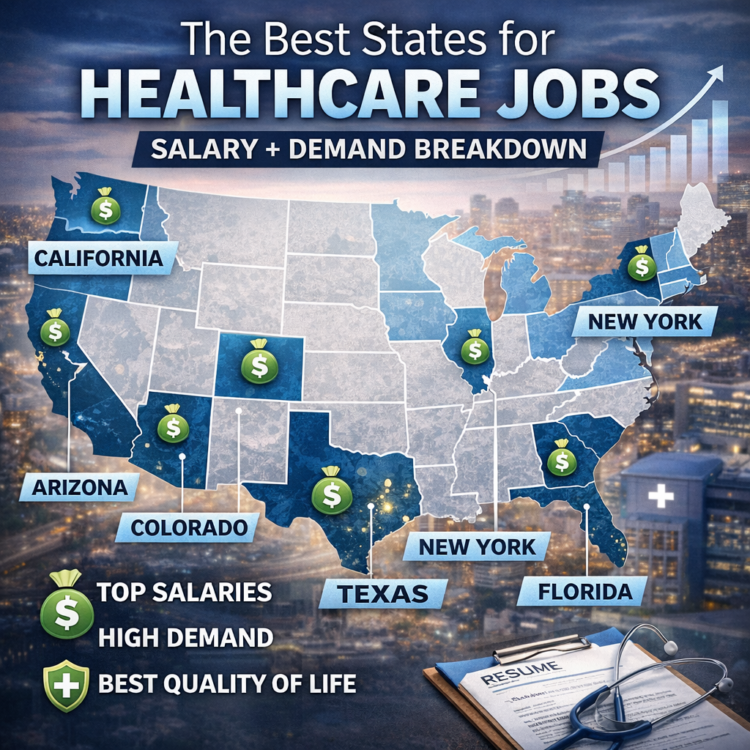
Some states offer higher salaries, others have stronger demand, and a few give you the best of both worlds. In this guide, we break down the best states for healthcare jobs in 2026, based on pay, demand, and overall opportunity.
What Makes a State “Best” for Healthcare Jobs?
Before jumping into the list, here are the key factors that matter:
- Average salary for healthcare roles
- Demand (job openings and shortages)
- Cost of living
- Work environment and regulations
- Growth opportunities
The goal isn’t just high pay—it’s high pay relative to your cost of living and opportunity for advancement.
1. California
Why it stands out:
- Highest nursing salaries in the U.S.
- Strong labor laws and nurse-to-patient ratios
- Huge demand across major cities
Average RN Salary: $110,000 – $150,000+
Best cities: Los Angeles, San Diego, San Francisco, Riverside
California consistently ranks as the top-paying state for nurses and many healthcare roles, making it ideal if income is your top priority.
2. Texas
Why it stands out:
- Massive population growth driving demand
- No state income tax
- Lower cost of living than California
Average RN Salary: $75,000 – $100,000+
Best cities: Houston, Dallas, Austin
Texas offers a strong balance of opportunity and affordability, especially for those early in their careers.
3. Florida
Why it stands out:
- Large aging population increasing healthcare demand
- No state income tax
- High demand for nurses, home health, and specialists
Average RN Salary: $70,000 – $95,000+
Best cities: Miami, Tampa, Orlando
Florida is ideal if you want consistent job opportunities and lifestyle benefits.
4. New York
Why it stands out:
- High salaries, especially in NYC
- Major hospital systems and teaching institutions
- Strong demand across specialties
Average RN Salary: $90,000 – $120,000+
Best cities: New York City, Buffalo, Rochester
New York is great for those looking for career advancement and top-tier medical environments.
5. Arizona
Why it stands out:
- Rapid population growth
- Ongoing healthcare worker shortages
- Lower cost of living than coastal states
Average RN Salary: $80,000 – $105,000+
Best cities: Phoenix, Tucson
Arizona is quickly becoming a hotspot for healthcare jobs, especially for nurses and support roles.
6. Washington
Why it stands out:
- High salaries and strong worker protections
- Growing healthcare systems
- No state income tax
Average RN Salary: $95,000 – $125,000+
Best cities: Seattle, Tacoma
Washington offers a strong mix of pay, benefits, and quality of life.
7. North Carolina
Why it stands out:
- Rapidly expanding healthcare systems
- Lower cost of living
- Strong demand in both urban and rural areas
Average RN Salary: $70,000 – $95,000+
Best cities: Charlotte, Raleigh, Durham
North Carolina is a great option for growth and affordability.
8. Colorado
Why it stands out:
- High quality of life
- Growing population and demand
- Competitive salaries
Average RN Salary: $85,000 – $110,000+
Best cities: Denver, Colorado Springs
Colorado is ideal if you want a balance between career and lifestyle.
High-Demand Roles Across All States
No matter where you go, these roles are consistently in demand:
- Registered Nurses (RN)
- Nurse Practitioners (NP)
- Physician Assistants (PA)
- Medical Technologists
- Home Health Aides
- Travel Nurses
How to Choose the Right State for You
The “best” state depends on your personal goals:
- Maximize income: California, Washington, New York
- Lower cost of living: Texas, North Carolina, Arizona
- Lifestyle + opportunity: Colorado, Florida
- Fast hiring demand: Arizona, Texas, Florida
Pro Tip: Travel Nursing as a Shortcut
If you’re unsure where to settle, travel nursing is a great way to:
- Test different states
- Earn higher short-term income
- Build experience quickly
Many nurses use travel roles to figure out where they eventually want to live and work full-time.
Start Exploring Opportunities
If you’re serious about increasing your income or advancing your career, location matters more than most people realize.
Start by:
- Browsing jobs by state
- Comparing salaries and demand
- Applying to high-opportunity regions
Final Thoughts
Healthcare jobs are in demand nationwide—but some states give you a major advantage.
Choosing the right location can mean:
- Higher pay
- More job options
- Faster career growth
If you’re willing to relocate—or even just explore your options—you can significantly improve your career trajectory.
View all of our open job listings.
Read more
If you’re a nurse (or planning to become one), you’ve probably asked yourself this question:
Should I be a travel nurse or a staff nurse?
Both paths offer strong earning potential, job security, and meaningful work—but they come with very different lifestyles, pay structures, and long-term opportunities.
This guide breaks down everything you need to know so you can choose the path that fits your goals.
What Is a Travel Nurse?
A travel nurse takes short-term assignments (typically 8–13 weeks) in different locations, often filling staffing shortages in hospitals across the country.
Key characteristics:
- Temporary contracts
- Frequent relocation
- Higher pay (often includes stipends)
- Flexibility between assignments
What Is a Staff Nurse?
A staff nurse is a permanent employee at a hospital, clinic, or healthcare facility.
Key characteristics:
- Stable, long-term position
- Consistent schedule and location
- Benefits like health insurance, PTO, retirement
- Opportunities for promotion and leadership
Salary Comparison
One of the biggest deciding factors is pay.
Travel Nurse:
- $2,000 – $4,000+ per week (depending on location and specialty)
- Housing and meal stipends often included
- Higher short-term earning potential
Staff Nurse:
- $80,000 – $130,000+ annually
- Consistent income and benefits
- Overtime opportunities
Bottom line:
Travel nurses usually earn more in the short term, especially in high-demand areas.
Lifestyle Differences
This is where the two paths really separate.
Travel Nurse Lifestyle
- New city every few months
- Constant change and new environments
- Opportunity to explore the country
- Less long-term stability
Staff Nurse Lifestyle
- Set workplace and routine
- Strong relationships with coworkers
- More predictable schedule
- Easier to settle down and build roots
Pros and Cons
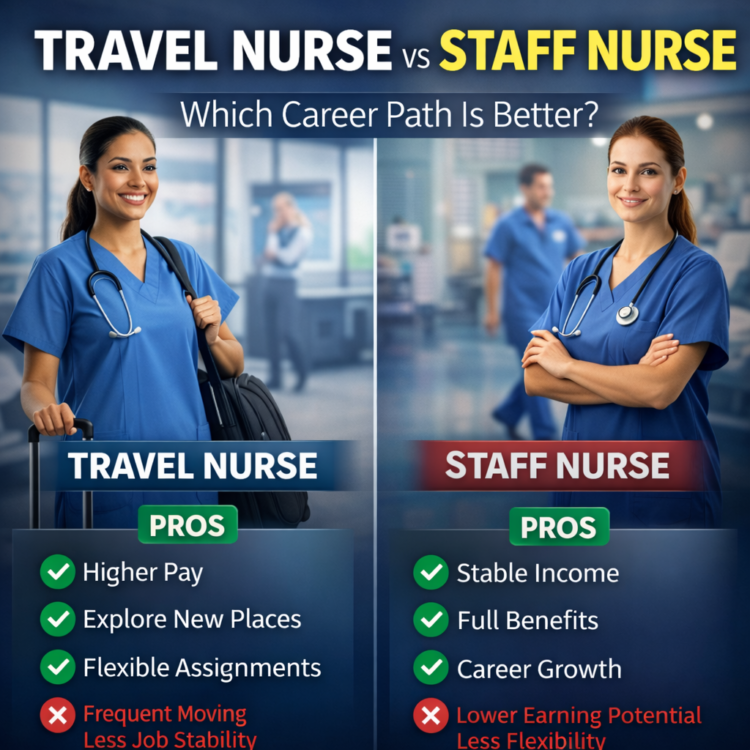
Travel Nurse Pros
- Higher earning potential
- Flexibility to take time off between assignments
- Opportunity to travel and explore new places
- Exposure to different healthcare systems
Travel Nurse Cons
- Frequent moving and housing logistics
- Less job stability
- Can feel isolating at times
- Limited long-term benefits
Staff Nurse Pros
- Stability and consistency
- Full benefits package
- Career advancement opportunities
- Strong workplace relationships
Staff Nurse Cons
- Lower earning ceiling (compared to travel roles)
- Less flexibility
- Potential for burnout in the same environment
Which Path Is Better for You?
It depends on your goals, personality, and current life situation.
Travel Nursing Might Be Better If You:
- Want to maximize income quickly
- Enjoy traveling and new environments
- Don’t mind temporary contracts
- Are flexible and adaptable
Staff Nursing Might Be Better If You:
- Want long-term stability
- Value benefits and job security
- Prefer consistency and routine
- Are focused on career growth within one organization
Can You Switch Between the Two?
Yes—and many nurses do.
A common path looks like this:
- Start as a staff nurse to gain experience
- Transition into travel nursing for higher pay
- Return to a staff role later for stability or leadership
This flexibility is one of the biggest advantages of a nursing career.
How to Get Started
If you’re considering either path, the best move is to start exploring real opportunities.
- Look at current staff nurse openings in your area
- Browse travel nurse assignments in high-demand locations
- Compare pay, benefits, and requirements
Final Thoughts
There’s no one-size-fits-all answer.
- Travel nursing offers freedom, flexibility, and higher short-term income
- Staff nursing offers stability, benefits, and long-term growth
The right choice is the one that aligns with your current goals—and the good news is, you can always change paths later.
View all of our open job listings.
Read more
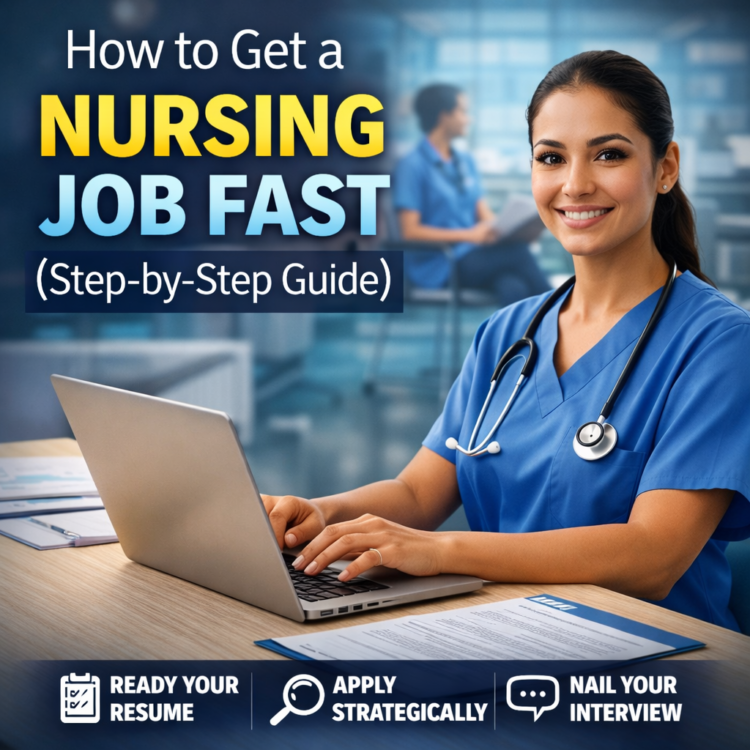
If you’re trying to land a nursing job quickly, the good news is this: demand for nurses is still extremely high in 2026. The challenge isn’t whether jobs exist—it’s positioning yourself to get hired faster than everyone else applying.
This step-by-step guide will walk you through exactly how to do that.
Step 1: Get Your Resume Dialed In (Healthcare-Specific)
Most nursing resumes get skipped in seconds. Yours needs to stand out immediately.
What to include:
- Licensure (RN, BSN, etc.) right at the top
- Certifications (BLS, ACLS, PALS, etc.)
- Clinical experience (specific units like ICU, ER, Med-Surg)
- Measurable impact (example: “Handled 6–8 patients per shift”)
Pro Tip:
Customize your resume for each job. Hospitals use filtering systems—generic resumes get ignored.
Step 2: Apply Smarter (Not Just More)
Most people blast applications everywhere. That’s a mistake.
Instead:
- Focus on roles you’re actually qualified for
- Apply within 24–48 hours of a job posting going live
- Use a dedicated healthcare job board (this site) to find fresh listings
Speed matters. Early applicants get the most attention.
Step 3: Optimize Your Online Presence
Hiring managers often search your name before calling you.
Make sure you:
- Update your LinkedIn with your nursing credentials
- Add a professional photo
- List your specialties and certifications
- Turn on “Open to Work”
This can bring recruiters directly to you.
Step 4: Leverage Recruiters & Staffing Agencies
This is one of the fastest ways to get hired.
Why it works:
- Recruiters already have relationships with hospitals
- They can fast-track your application
- Many roles are never posted publicly
This is especially powerful for travel nursing or urgent placements.
Step 5: Prepare for Interviews (Before You Get One)
Most nurses wait until they get an interview to prepare—don’t do that.
Be ready for:
- “Tell me about yourself”
- “Describe a difficult patient situation”
- “Why do you want to work here?”
Quick win:
Have 2–3 strong patient care stories ready using the STAR method (Situation, Task, Action, Result).
Step 6: Be Flexible (This Speeds Everything Up)
If your goal is speed, flexibility is your advantage.
Ways to get hired faster:
- Be open to night shifts or weekends
- Consider contract or travel roles
- Apply in high-demand locations
The more flexible you are, the more doors open immediately.
Step 7: Follow Up (Almost No One Does This)
This alone can separate you from most applicants.
After applying:
- Follow up via email or LinkedIn within 2–3 days
- Keep it short and professional
- Reaffirm your interest
After interviews:
- Send a thank-you email within 24 hours
This shows initiative, and hiring managers notice.
Step 8: Apply Consistently (Daily System)
Getting hired fast is a numbers and strategy game.
Simple daily system:
- Apply to 5–10 targeted jobs per day
- Follow up on previous applications
- Check for new listings (morning and evening)
Consistency is what drives results.
Common Mistakes That Slow You Down
Avoid these if you want to get hired quickly:
- Using the same resume for every job
- Waiting too long to apply
- Not preparing for interviews
- Ignoring follow-ups
- Only applying to “perfect” roles
Start Applying Now
The fastest way to get hired is to take action immediately.
Browse the latest nursing jobs, apply to fresh listings today, and set up alerts so you never miss an opportunity.
Final Thoughts
Getting a nursing job fast isn’t about luck—it’s about strategy, speed, and consistency.
If you follow this process:
- You will stand out more
- You will get more interviews
- You will land a job faster than most candidates
View all of our job listings here.
Read more
Healthcare continues to be one of the most stable and rewarding career fields—and in 2026, many roles are paying more than ever due to ongoing demand, staffing shortages, and specialized skill requirements.
Whether you’re just starting out or looking to level up your career, here are the 10 highest paying healthcare jobs in 2026, along with salary ranges, requirements, and what makes each role worth considering.
1. Certified Registered Nurse Anesthetist (CRNA)
Average Salary: $190,000 – $240,000+
Education: Master’s or Doctorate in Nurse Anesthesia
Why it pays well: CRNAs administer anesthesia for surgeries and procedures—high responsibility and critical skill.
👉 One of the highest-paid nursing roles with strong demand nationwide.
2. Physician (Specialists)
Average Salary: $220,000 – $500,000+
Education: Medical Degree (MD/DO) + Residency
Top specialties: Orthopedics, Cardiology, Dermatology, Radiology
👉 Specialists consistently top salary charts due to expertise and long training paths.
3. Nurse Practitioner (NP)
Average Salary: $115,000 – $160,000+
Education: Master’s or Doctorate in Nursing
Why it pays well: NPs can diagnose, treat, and prescribe—often working independently.
👉 One of the fastest-growing healthcare careers.
4. Physician Assistant (PA)
Average Salary: $110,000 – $150,000+
Education: Master’s Degree + Certification
Why it pays well: PAs work closely with physicians and handle a wide range of patient care tasks.
👉 High pay with less schooling than physicians.
5. Pharmacist
Average Salary: $120,000 – $150,000+
Education: Doctor of Pharmacy (PharmD)
Why it pays well: Medication expertise is critical in hospitals, retail, and clinical settings.
6. Registered Nurse (RN)
Average Salary: $80,000 – $130,000+
Education: ADN or BSN
High-paying areas: ICU, ER, Travel Nursing, California markets
👉 Strong income potential with opportunities to specialize or travel.
7. Physical Therapist (PT)
Average Salary: $90,000 – $120,000+
Education: Doctor of Physical Therapy (DPT)
Why it pays well: Helps patients recover mobility after injuries or surgeries.
8. Occupational Therapist (OT)
Average Salary: $85,000 – $115,000+
Education: Master’s Degree
Why it pays well: Focuses on helping patients regain daily living skills.
9. Healthcare Administrator / Medical & Health Services Manager
Average Salary: $95,000 – $150,000+
Education: Bachelor’s or Master’s (often MHA or MBA)
Why it pays well: Oversees operations, staff, and budgets in healthcare facilities.
👉 Great option if you want to move out of clinical work.
10. Radiologic Technologist (Advanced Imaging Roles)
Average Salary: $75,000 – $110,000+
Education: Associate’s or Bachelor’s Degree
High-paying specialties: MRI, CT, Interventional Radiology
View all of our open jobs here.
Read more